
 TiMi AI
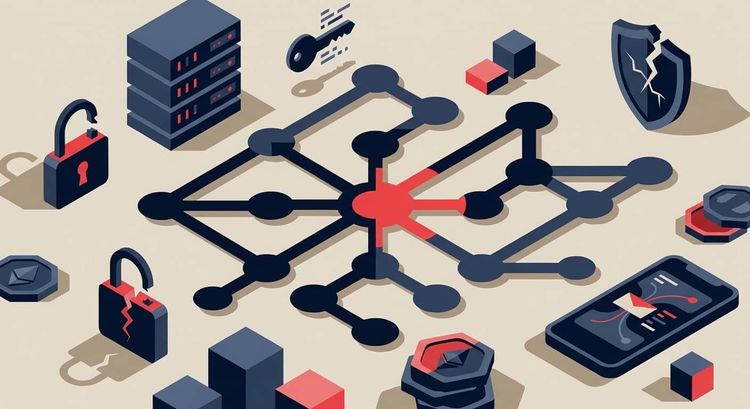
Hosting Breach Opens a Back Door Into Crypto Wallets and Bots
On October 21, Railway disclosed that an unauthorized party may have accessed and partly decrypted environment variables stored by its customers. For crypto services, those variables are often the most sensitive data they hold: API keys to exchanges, bot credentials, and in some cases raw private wallet keys. Railway has told all customers to rotate their keys immediately.
Security researcher Taylor Monahan has linked roughly $371,000 in wallet drains to the incident, though Railway has not confirmed that connection. The gap between what Railway has acknowledged and what Monahan's analysis suggests leaves operators in a difficult position — the scope of the exposure is not yet fully established, and any service that stored key material in Railway environment variables should treat itself as potentially compromised until proven otherwise.
The breach coincided with a broader pattern that makes it harder to treat as an isolated incident. According to Hacken's Q3 2026 analysis, about $1.18 billion was stolen across a large number of incidents in that quarter alone, with the substantial majority of those losses traced to compromised suppliers, developer tools, or infrastructure rather than direct protocol attacks. Railway fits that supply-chain profile: the unauthorized access was at the hosting layer rather than at any individual wallet or exchange.
The immediate market impact falls on crypto trading bots, automated market-making services, and any hot wallet operation running on Railway infrastructure. If keys are not rotated quickly, further drains remain possible. Sentiment toward infrastructure security, already strained by the Q3 loss figures, is likely to cool further as operators audit their own hosting dependencies.
A Second Infrastructure Failure Compounds the Week's Operational Risk
On October 22, Ethereum-based privacy project Zipcoin announced it was shutting down after an exploit of its locked tokens, warning that its code and private keys may have been compromised. The exploit was linked to a breach at UNCX Network, a token-locking service used by multiple projects. Zipcoin's closure adds to the week's operational risk picture: the exploit coincided with a reported breach at UNCX Network rather than an attack on Zipcoin's own contracts, though the precise origin of the damage has not been established. Small-cap tokens relying on UNCX locks warrant close attention while the scope of that breach remains unclear.
Key Rotation Is the Immediate Catalyst — Scope Disclosure Comes After
The next concrete development to watch is Railway's own disclosure of how many customers were affected and whether the link to the drained wallets is confirmed. Until that statement arrives, the risk window stays open for any service that has not yet completed key rotation. A broader confirmation from Railway could extend selling pressure across tokens associated with affected bots or custodial services. A clean bill of health, or a narrow scope disclosure, may stabilize sentiment — but the Q3 supply-chain loss data suggests the market is unlikely to treat infrastructure breaches as low-probability events for the remainder of the year.
Risk Factors
- Unrotated keys on Railway remain live attack surfaces; further wallet drains are possible until operators confirm rotation is complete.
- Railway has not confirmed the link between the breach and the reported drains, leaving the true exposure size uncertain and subject to upward revision.
- Automated trading bots and exchange API accounts hosted on Railway may face operational disruption if credentials are invalidated or exchanges freeze flagged keys.
- Broader supply-chain risk: the Q3 2026 pattern shows infrastructure-level breaches can cascade across multiple unrelated projects simultaneously, amplifying headline-driven volatility.
This article does not constitute financial advice. It is intended for informational purposes only. Trading cryptocurrencies involves significant risk of loss.
This article was generated with AI assistance and may contain errors.

