
 TiMi IA
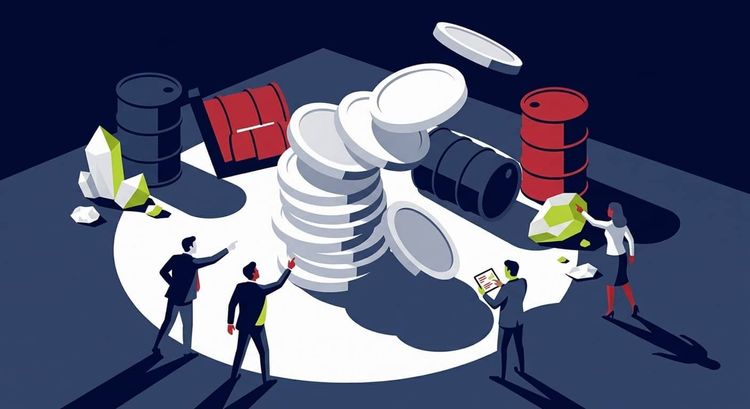
Oversold Bounce Drives Oil to $92.18
Oil climbed 2.44% to $92.18 as of 1 October 2026 at 09:34 UTC, recovering from a two-day slide that had pulled prices sharply lower after a run of bearish supply reports out of the Persian Gulf region.
The move followed a market reassessment of data suggesting that oil flows through the Strait of Hormuz had nearly returned to pre-war levels. Analysis from multiple institutions — cited in the reason field — put Hormuz throughput at between roughly 80% and 98% of pre-war volumes, with one estimate placing total Middle East crude exports at 23.3 million barrels per day, matching the average rate seen through 2025. Rather than extending the prior session's sell-off on that news, traders appeared to fade the bearish narrative, treating the two-day decline as excessive.
Stalled diplomatic progress between the United States and Iran added a layer of uncertainty that tempered any outright bearish conviction. Reports of Iranian attacks on tankers in the Strait of Hormuz circulated but, according to analysis of the session, were largely discounted by the market.
On the supply side, Saudi Arabia was reported to have resumed loadings at Yanbu following a restart of the East-West Pipeline, though the pipeline was said to be operating well below full capacity — a detail that limited the bearish read-through from the Gulf flow data.
A separate development out of Canada provided a supportive backdrop. According to financialpost.com, Ottawa was widely expected on 1 October to designate the proposed $44-billion West Coast oil pipeline as a project of national interest, placing it on an accelerated regulatory track and moving it closer to construction. The designation, while not an immediate supply event, signals a longer-term expansion of Canadian export capacity and reinforced positive sentiment around the crude complex.
A Month of Swings Beneath a Six-Month Decline
The session's recovery sits within a volatile one-month window. Over the past month, oil has gained 6.49%, swinging between a low of $86.20 and a high of $106.69 — a range that reflects the market's difficulty pricing a conflict-era supply picture that keeps shifting.
Zoom out further and the picture is more bearish. Over six months, crude has shed more than 10%, well below the six-month peak, as diplomatic signals and recovering Gulf flows have repeatedly capped rallies. The 1 October bounce interrupts that trend but does not yet reverse it.
Gulf Flow Data and Iran Talks Set the Next Test
The durability of this recovery hinges on two threads: whether Gulf oil flows continue to normalize — which would rebuild the bearish supply case — and whether U.S.–Iran diplomatic contacts resume or break down entirely.
If Persian Gulf throughput data in the coming sessions confirms the near-full recovery that multiple institutions have estimated, the oversold bounce could stall quickly. Conversely, any escalation involving tanker attacks in the Strait of Hormuz that gains broader confirmation would reintroduce a supply-risk premium the market has so far chosen to ignore.
Risk Factors
- Volatility risk: A 2.44% single-session swing in either direction is consistent with the one-month trading range of $86.20–$106.69, meaning further sharp reversals remain plausible without a change in fundamentals.
- Gulf supply normalization: If Persian Gulf oil flows fully return to pre-war levels as multiple institutional estimates suggest, the supply-risk premium embedded in current prices could unwind rapidly.
- Iran diplomacy: Stalled U.S.–Iran talks could reignite geopolitical risk premiums, but a sudden breakthrough toward a deal could push prices sharply lower by removing the conflict discount.
- Canadian pipeline timeline: Ottawa's fast-track designation of the $44-billion West Coast pipeline accelerates regulatory review but does not guarantee construction or a near-term supply impact — sentiment benefit could fade if the project faces further delays.
This article does not constitute financial advice. All prices and percentage changes are sourced from market data as of 2026-10-01 09:34 UTC and may not reflect current market conditions. Past performance is not indicative of future results. Trading commodities involves significant risk of loss.
This article was generated with AI assistance and may contain errors.

